
Commercial Interior Design Trends for 2026
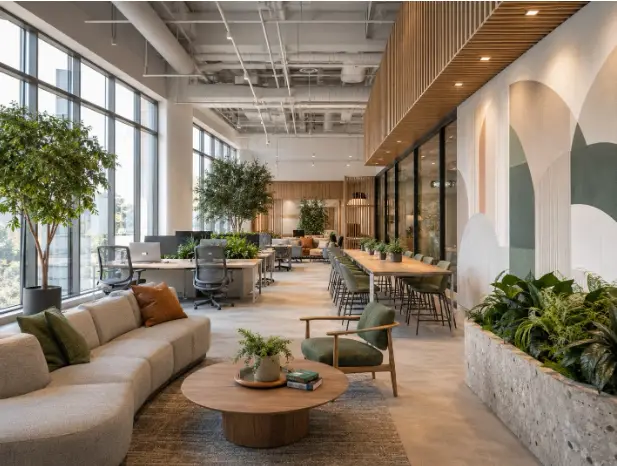
Commercial interior design in 2026 is shaped by a simple imperative: make the office worth coming to. As hybrid work continues to define how companies use space, the physical workplace has to offer something the home office cannot — community, culture, and a designed environment that inspires.
Here are the trends driving commercial interior design decisions this year, and how MetWest’s products connect to each one.
1. Biophilic Design at Scale
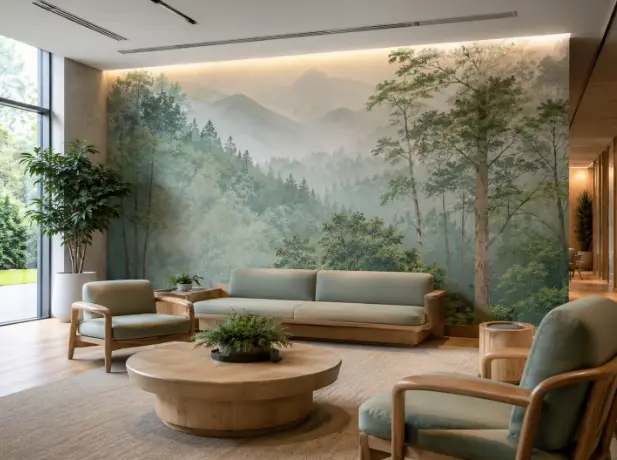
Biophilic design — incorporating natural elements, textures, and imagery into built environments — has moved from boutique to mainstream. In 2026, it’s showing up in unexpected ways: large-format wall murals depicting forests, coastlines, or botanical scenes that bring the outside in
MetWest’s custom mural wall coverings are a direct response to this trend. We can print any nature-inspired image at full-wall scale, creating immersive environments that promote wellbeing and reduce stress.
2. Branded Environments as Culture Tools
The office has become a culture broadcast medium. Companies are investing in spaces that express their values, history, and identity — not just through signage, but through the walls, floors, and glass surfaces themselves. Custom wall graphics, branded glass films, and mission-statement murals are being used to communicate what the brand stands for before a single word is spoken.
3. Privacy in Open Plans
Open-plan offices are here to stay, but so is the need for privacy. In 2026, designers are solving this tension with gradient glass films, frosted film bands, and decorative glass applications that create visual separation without building walls. The look is clean, modern, and intentional.
4. Collaboration-Centered Design
The spaces that drive people into the office are collaboration spaces — rooms designed for creative work, not just meetings. Writable wall coverings are a key element of this trend, transforming entire walls into ideation surfaces that teams actually want to use.
5. Sustainability as a Design Value
LEED certification and ESG commitments are driving material specifications toward sustainable options. Wall coverings with low VOC adhesives, products made from recycled content, and film-based solutions that extend the life of existing glass rather than replacing it all align with sustainability goals.
6. Exterior Brand Expression
The building exterior is being treated as a brand touchpoint. Building wraps are no longer just for construction hoarding or retail events — they’re permanent (or semi-permanent) brand installations that communicate identity at street scale.
No Comments