
When Should Glass Film Be Installed During a Commercial Build-Out?
Glass film is usually one of the later finishes installed in a commercial build-out, but waiting until the last possible moment creates its own problems. The best schedule separates early design and production decisions from the final field installation.
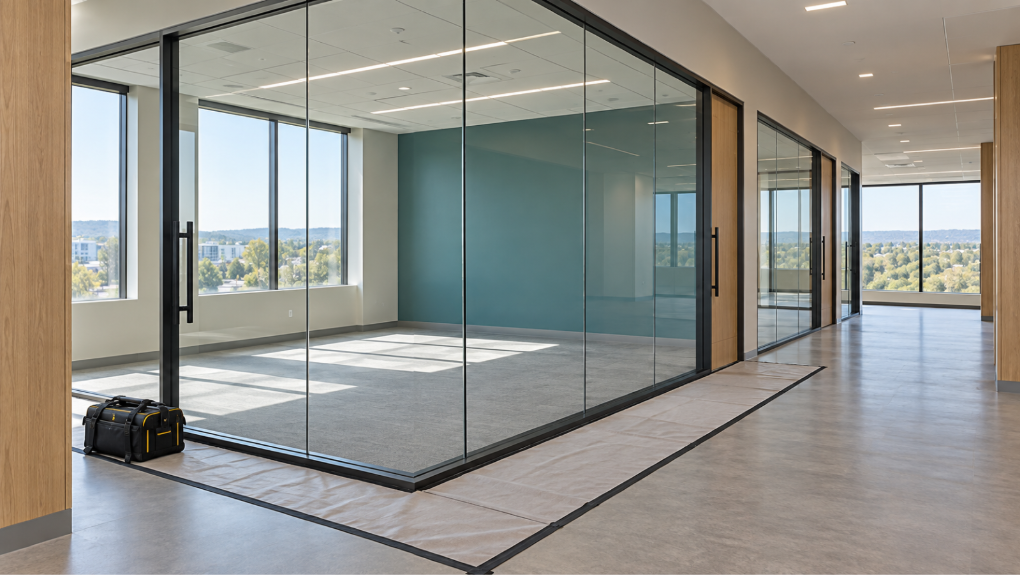
Start the submittal process early
Film type, artwork, elevations, colors, opacity, samples, and strike-offs should be resolved well before the installation date. Custom production cannot begin from an unapproved concept, and the field crew cannot recover time lost to late design decisions.
Verify after the glass is stable
Final measurements should occur after glazing, frames, doors, and relevant hardware are installed and unlikely to change. If the glass is measured too early, substitutions, field adjustments, or revised openings can make custom panels inaccurate.
Install after damaging work is complete
Painting, drywall sanding, ceiling work, overhead drilling, caulking, millwork, and other dusty or damaging activities should be substantially complete. Wet paint, uncured sealant, construction debris, and active work over the glass can contaminate or damage a finished installation.
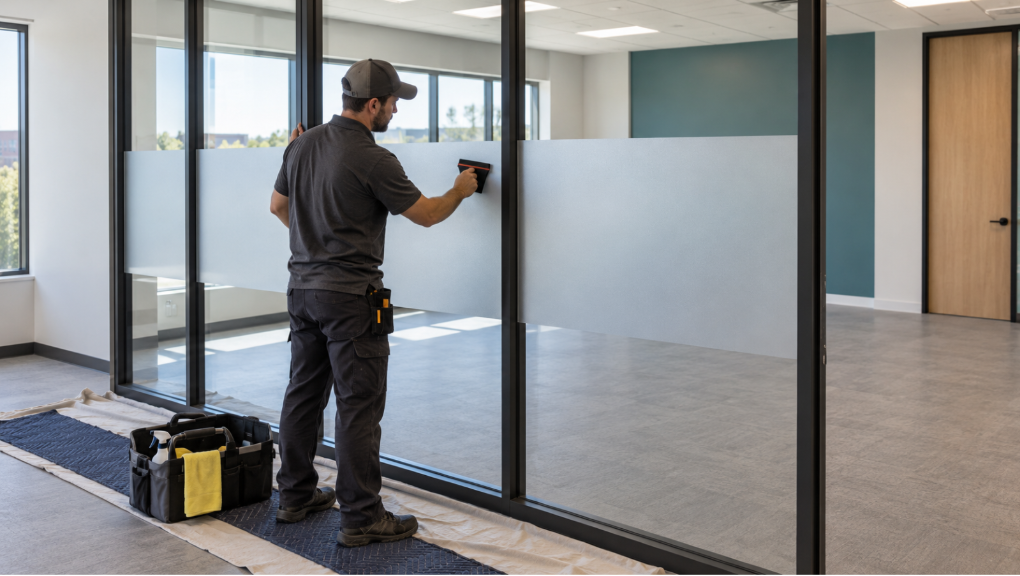
Coordinate flooring, furniture, and access
Finished flooring may need protection, while furniture and equipment can block access. Decide whether film should go in before furniture delivery or whether the space will be cleared later. Reserve lifts, loading, parking, security access, and uninterrupted work areas in advance.
Leave time for inspection and punch
Do not schedule installation at the exact moment the client expects turnover. Allow time for curing, cleaning instructions, inspection, small adjustments, and resolution of damaged or inaccessible areas. The closeout plan should identify who accepts the work and how other trades will protect it afterward.
Planning Questions to Ask Early
- Are film selections, elevations, artwork, and strike-offs fully approved?
- Are glass, sealant, paint, and surrounding finishes complete and ready?
- Is there protected access and time for inspection before owner turnover?
Why MetWest Fits This Scope
MetWest can work backward from the required installation date, identify approval and production milestones, verify site readiness, and coordinate the field crew with the project schedule. Early communication protects the finish date without installing into an unfinished environment.
No Comments