
How Lighting Affects One-Way Privacy Film
One-way privacy film is often described as if it works in every condition. It does not. Reflective privacy depends on a lighting imbalance: the observer must generally be on the brighter side while the protected side remains darker.
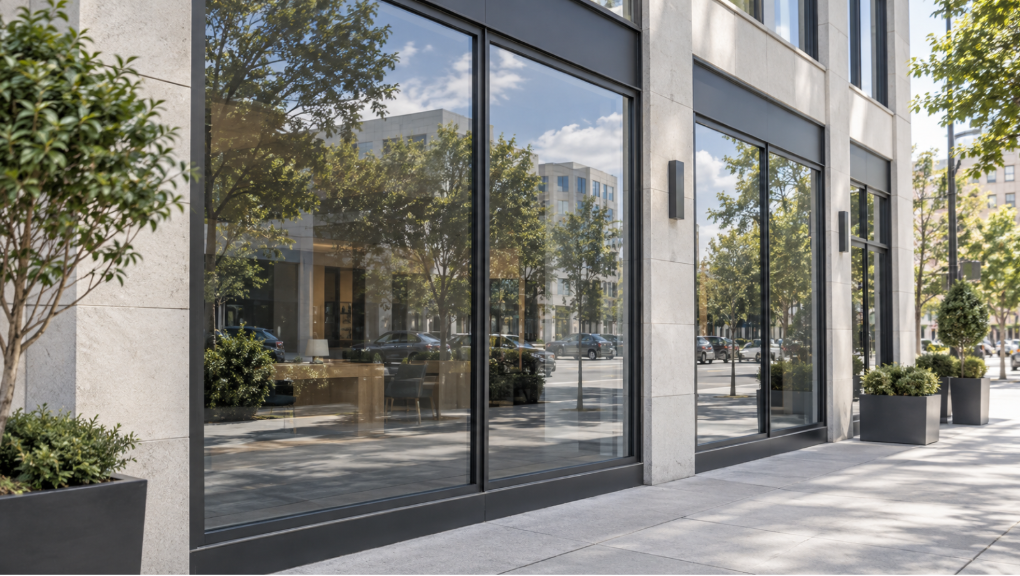
The brighter side sees reflection
Reflective film sends more visible light back toward the brighter environment. A person on that side sees a stronger reflection and has more difficulty seeing through the glass. From the darker side, occupants can often see outward more clearly because there is less reflected light competing with the view.
Why the effect can reverse
At night, a brightly lit interior may become the brighter side. Someone outside may then see into the space while occupants see their own reflection. The same reversal can happen during the day if a dark corridor faces a strongly lit room. The film did not stop working; the lighting relationship changed.
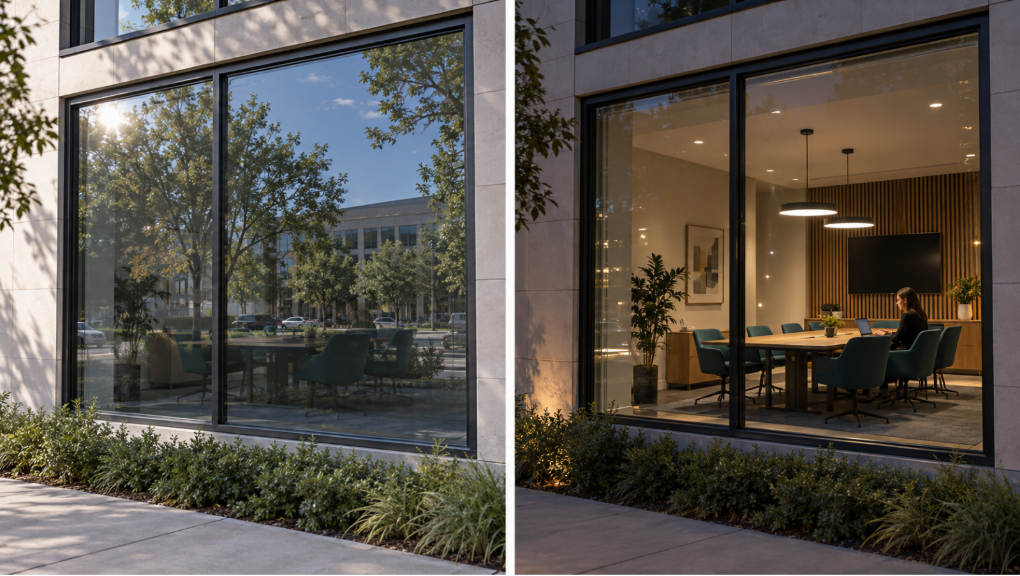
Evaluate the real space
Look at the glass during the hours when privacy matters. Consider daylight direction, exterior shade, interior fixtures, lobbies, corridors, adjacent rooms, signage, and seasonal changes. A daytime sample may not predict evening performance, and a photograph taken from one angle may not represent every approach.
When another film is better
If privacy must remain consistent regardless of lighting, a frosted, patterned, gradient, or opaque film may be more dependable. Those options reduce or block the view rather than relying on reflectivity. The tradeoff is that they also change visibility from the protected side.
Combine lighting and film intentionally
Where reflective privacy is appropriate, lighting controls can strengthen the result. Reduce light near the protected glass, limit bright objects directly behind it, and keep the observer side brighter. Document the lighting assumption so future operational changes do not undermine the original privacy plan.
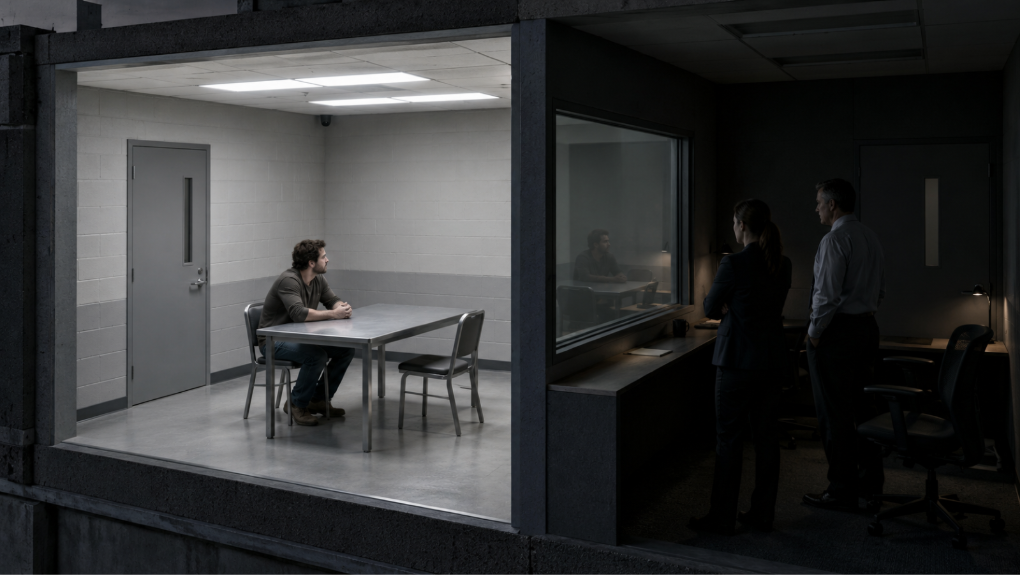
Planning Questions to Ask Early
- Which side will be brighter during the hours when privacy is required?
- Does privacy need to work after dark or only during daylight hours?
- Would a frost, gradient, or opaque treatment better match the requirement?
Why MetWest Fits This Scope
MetWest can review the viewing directions and lighting conditions, provide on-glass samples, and recommend a film based on how the space actually operates. That avoids promising true one-way privacy where the lighting cannot support it.
Ready for more information? Get an estimate – MetWest
No Comments