
How to Update Commercial Doors Without Replacing Them
Worn doors can make an otherwise well-maintained property look dated. Replacement solves the appearance problem, but it can also trigger hardware coordination, long lead times, noise, disposal, and disruption. Architectural surface film offers another option: refinish the visible door surface while keeping the existing door in service.
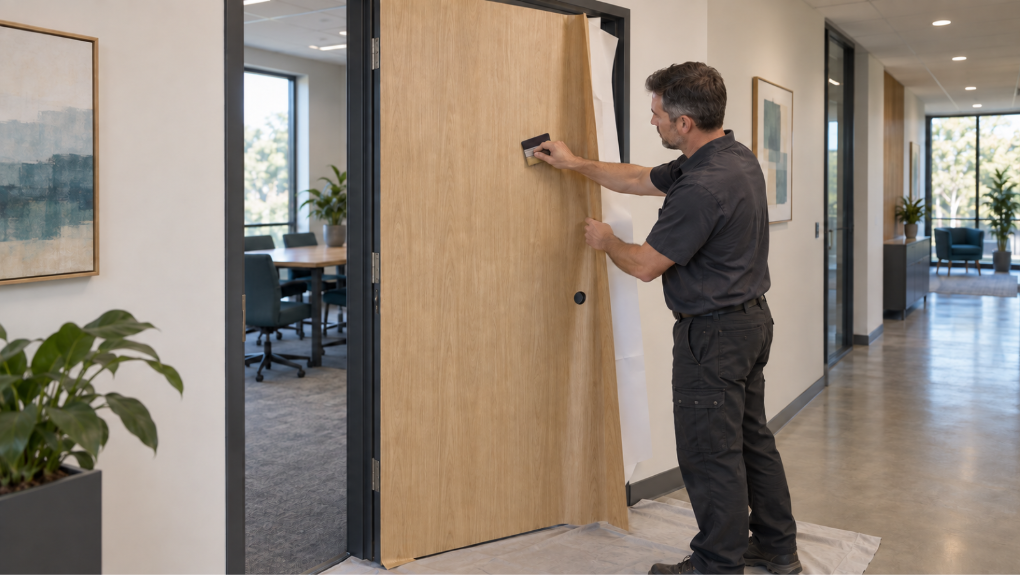
What architectural surface film is
Architectural surface film is a durable finish applied over a prepared substrate. It is available in wood grains, solids, metallics, stone looks, and other textures. On a suitable door, it can cover scratches, dated colors, or an inconsistent finish and create a more uniform appearance across a floor or building.
Why managers choose resurfacing
Resurfacing avoids removing and disposing of a functioning door. Work can often be completed with substantially less disruption than a replacement program, and doors can be handled in phases so occupied areas remain usable. The approach is especially practical when the door core and hardware are still serviceable but the finish no longer fits the space.
Where it works – and where it does not
A field review is important. Film performs best on stable, smooth, properly prepared surfaces. Severe delamination, moisture damage, major impact damage, failing veneer, or a door that no longer operates correctly may require repair or replacement first. Fire-rated assemblies, labels, clearances, and hardware conditions must also be respected; resurfacing should never cover required markings or interfere with door operation.
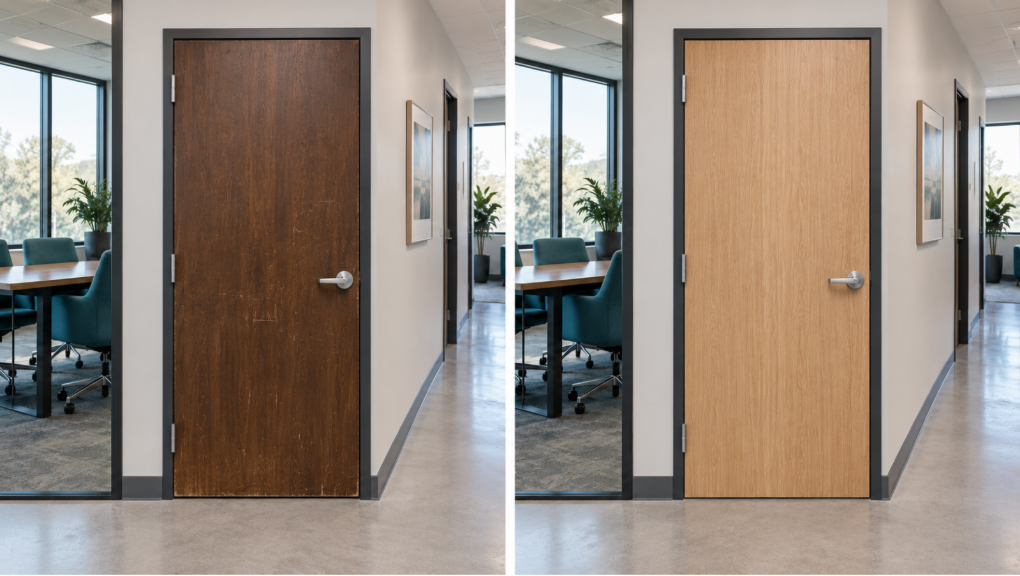
Finish consistency across a property
A resurfacing program can standardize mismatched doors added during different renovation cycles. Property teams can choose one finish for tenant corridors, another for service areas, or a coordinated palette for doors, frames, millwork, and elevator surrounds. Samples should be reviewed in the building because lighting can materially change how wood grains and colors read.
Planning the work
Start with a door count, photographs, locations, dimensions, substrate condition, hardware type, access hours, and any security restrictions. MetWest can then identify which doors are good candidates, prepare samples, develop a phased installation plan, and establish realistic production and field time.
Planning Questions to Ask Early
- Are the doors structurally sound and operating correctly?
- Which required labels, hardware, or access-control components must remain untouched?
- Can the work be phased by floor, department, or after-hours access window?
Why MetWest Fits This Scope
MetWest can evaluate existing surfaces, coordinate finish samples, prepare the doors, and install architectural film around the realities of an occupied property. The result is a controlled refresh without turning a cosmetic problem into a full replacement project.
Get an estimate on your next project: Get an estimate – MetWest
No Comments