
How to Specify Glass Film in a Commercial Interior Design Project
Specifying glass film for a commercial project doesn’t have to be complicated — but it does require the right partner and a clear process. Whether you’re working on a corporate headquarters, a healthcare facility, or a boutique retail space, glass film is one of the most versatile and design-forward tools in your specification toolkit.
Here’s how to do it right, from initial concept to final installation.
Step 1: Understand the Goal of the Space
Before selecting any product, ask: what is this glass meant to do? Common objectives include:
- Privacy for conference rooms, offices, or patient areas
- Branding — incorporating logos, patterns, or color into glass walls
- Distraction markers for floor-to-ceiling glass in high-traffic corridors
- Solar control to manage glare and heat in south- or west-facing facades
- Aesthetic enhancement — turning plain glass into a design feature
Each goal points to a different glass film category, and often a single project will require more than one type.
Step 2: Know Your Product Options
Glass film has evolved well beyond the frosted privacy film of the 1990s. Today’s options include:
- Decorative glass film — patterned, frosted, or custom-printed for branding and aesthetics
- Gradient films — smooth transitions from clear to opaque for a modern, architectural look
- Distraction markers and custom bands —in some areas, they are required by ADA and IBC code for glazed walls and doors
- Commercial security film — adds shatter resistance without altering appearance
Solar control film — reduces heat gain and glare while preserving natural light
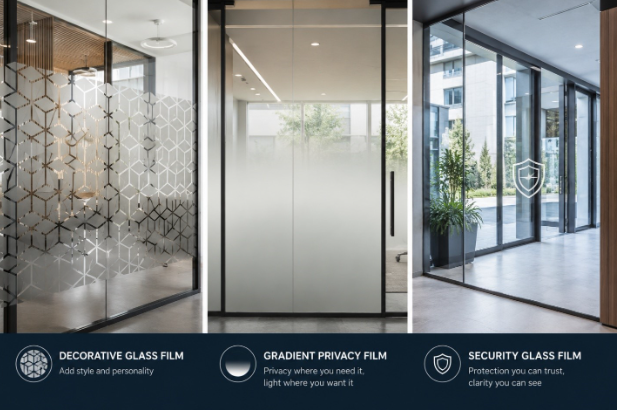
At MetWest, we offer all of these categories with in-house design support, so you’re never navigating the selection alone.
Step 3: Initiate the Specification Process
Once you’ve identified the right product category, here’s how the MetWest specification process works:
- Share your architectural drawings — we’ll do take-offs and provide a pricing estimate within 3–5 business days
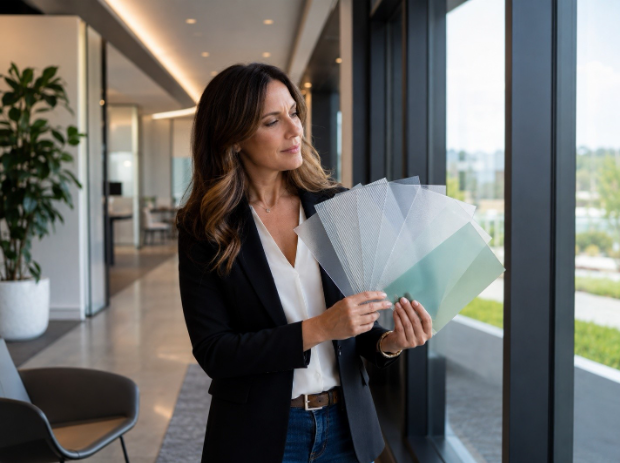
- We’ll send physical samples (strike-offs) for material type and color approval
- Our team creates elevations so you can visualize exactly how the film will look in your space
- Once you approve, production begins — typically 7–10 business days
- Installation is scheduled around your project timeline
The MetWest Advantage means you stay in control of the design while we handle the technical execution.
Step 4: Communicate with the Contractor
In most commercial projects, your specification will be handed off to a general contractor who coordinates installation. Make sure your spec includes:
- Product name and SKU
- Elevation drawings with dimensions
- Notes on sequencing (glass film is typically installed after flooring and painting)
- Your MetWest contact for field questions
When MetWest is already in the project, we work directly with contractors to answer RFIs and coordinate site visits — keeping your project on schedule.
Why Designers Choose MetWest
We’ve been trusted by Fortune 500 companies and leading design firms for over 30 years because we understand the designer’s world. We offer:
- In-house design team to bring custom concepts to life
- Sample library with physical strike-offs
- AIA-accredited continuing education course on architectural films
- Full project support from estimate to installation punch list
No Comments